
Reducing Waste and Idle Labor Through Better Logistics Planning
Reading time: 5 min
In construction, delays are often blamed on execution—but in reality, many of them originate much earlier: poor logistics planning.
Unstructured material requests, lack of visibility, and last-minute demands create a chain reaction of warehouse overload, late deliveries, idle field teams, and unnecessary operational waste.
This article explores how a modern logistics management system helps companies reduce inefficiencies, improve coordination, and create more predictable project operations through better planning and lead-time control.
The Hidden Cost of Poor Logistics
Many companies still rely on spreadsheets, WhatsApp messages, or even paper-based requests to manage materials. While this may seem manageable at first, it quickly breaks down as projects scale.
Common problems include:
- Requests submitted without sufficient lead time
- Multiple teams requesting materials simultaneously
- No visibility into warehouse workload and capacity
- Lack of accountability for delays
- Emergency separations becoming routine
The result is operational chaos that directly impacts productivity.
The Real Impact of Idle Labor
Idle labor is one of the most expensive hidden costs in construction and industrial projects.
When teams wait hours for material separation or delivery:
- Productivity drops
- Installation schedules slip
- Overtime increases
- Emergency logistics costs rise
- Project predictability disappears
For companies managing multiple projects simultaneously, these inefficiencies compound quickly.
What appears to be a "warehouse issue" is often a planning and coordination problem.
What Is a Logistics Management Module?
A logistics management module is a centralized platform that controls the full lifecycle of material requests—from submission and approval to separation, dispatch, and delivery.
Instead of reacting to operational pressure, companies gain the ability to:
- Plan ahead
- Balance warehouse workload
- Monitor lead times
- Prioritize requests
- Improve coordination between field and warehouse teams
The goal is not simply to move materials faster, but to create a more structured and predictable workflow.
From Reactive Operations to Planned Coordination
Traditional workflow:
"We need this material now."
Structured workflow:
"This material is required tomorrow at 10:00, and separation must be completed today before 16:00."
This operational shift fundamentally changes how projects are executed.
With structured logistics planning:
- Warehouse teams can organize workload efficiently
- Project managers gain visibility into constraints
- Operational bottlenecks become visible earlier
- Emergency requests are reduced
- Field productivity improves
Key Features That Reduce Waste and Improve Productivity
Lead-Time Enforcement
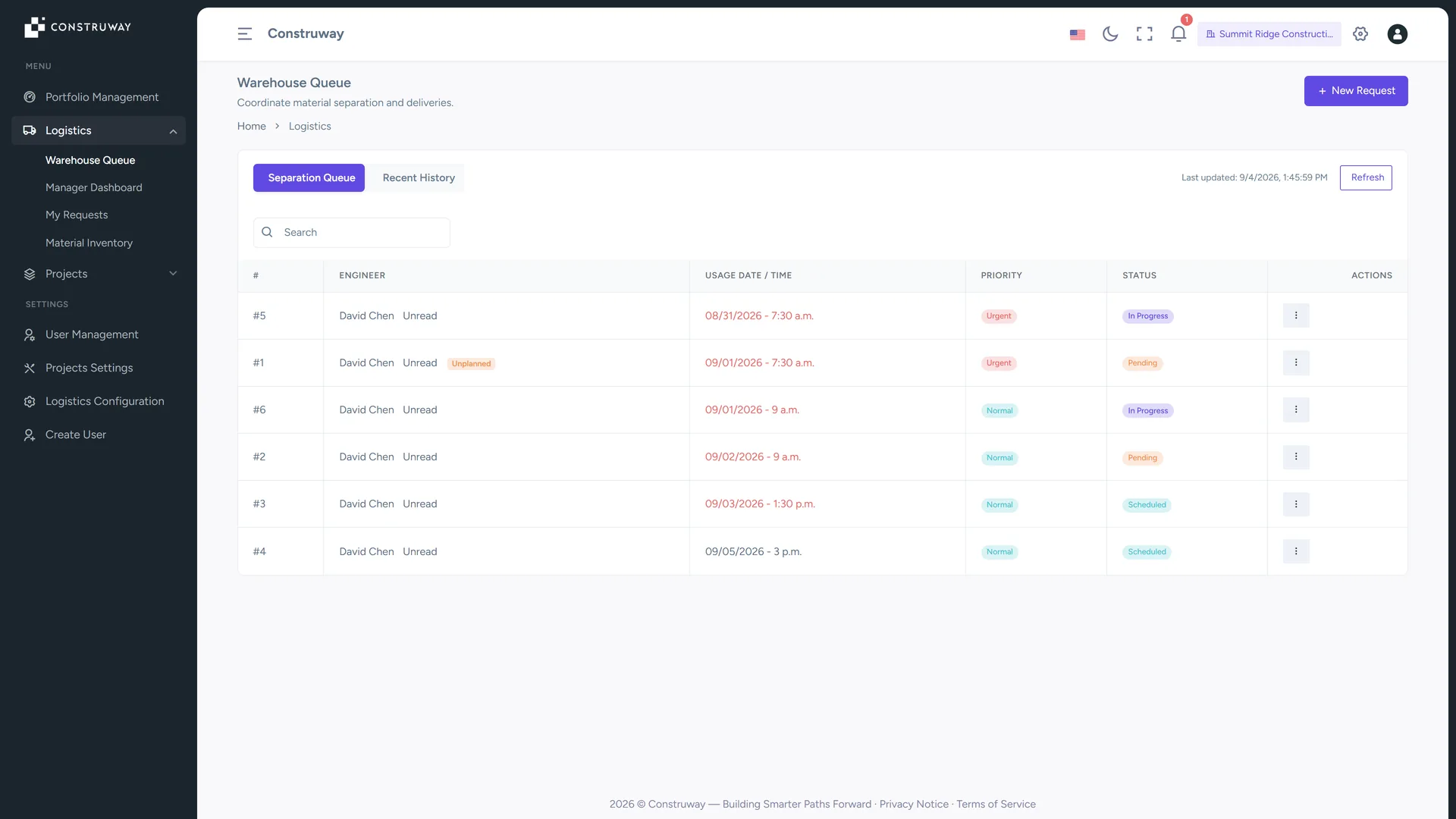
A structured logistics system ensures that every request respects a minimum operational lead time.
If a request is submitted too late:
- It is automatically flagged as urgent
- Managers are notified
- The operational impact becomes visible immediately
This creates accountability and encourages better planning habits across projects.
Load vs Capacity Visualization
One of the most valuable capabilities is understanding:
- How many requests are scheduled
- How much work the warehouse can realistically handle
- Where overloads are likely to happen
By identifying workload peaks in advance, companies can prevent bottlenecks before they impact field operations.
SLA and Performance Tracking
By monitoring timestamps throughout the workflow, companies can measure:
- Approval time
- Separation time
- Delivery performance
- Average lead time
- Emergency request frequency
This creates operational transparency and supports continuous improvement.
Why Construction benefit the Most
Construction companies are especially sensitive to logistics inefficiencies because:
- Labor costs are high
- Materials are bulky and complex
- Installation depends on strict sequencing
- Site conditions change rapidly
- Delays impact multiple downstream activities
In these environments, improving logistics coordination directly improves profitability.
Measuring the Operational ROI
Companies that implement structured logistics planning often experience:
- Fewer emergency requests
- Higher on-time delivery rates
- Lower idle labor costs
- Reduced warehouse overload
- Better project predictability
- Improved operational accountability
Even small improvements in planning and lead-time management can generate significant savings over time.
Conclusion
Logistics is no longer just a support activity—it is a critical operational function that directly impacts productivity, project timelines, and profitability.
By replacing reactive processes with structured planning and workload visibility, companies can:
- Reduce waste
- Eliminate avoidable delays
- Improve workforce productivity
- Create more predictable operations
The companies that gain control over logistics gain control over project execution itself.
Ready to automate your project controls? Book a demo to see the Schedule Control Engine live.
Related articles
Deep dives into the tools and strategies that keep capital projects on track.